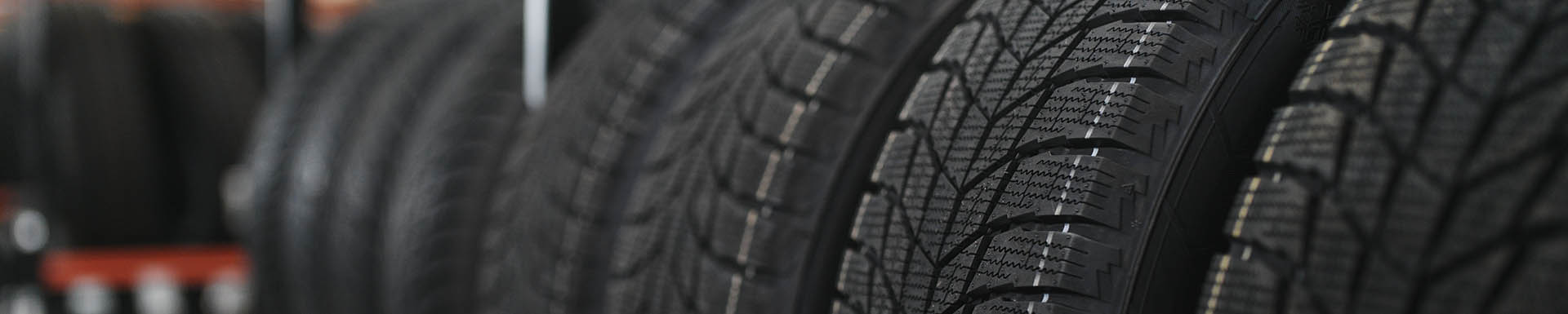
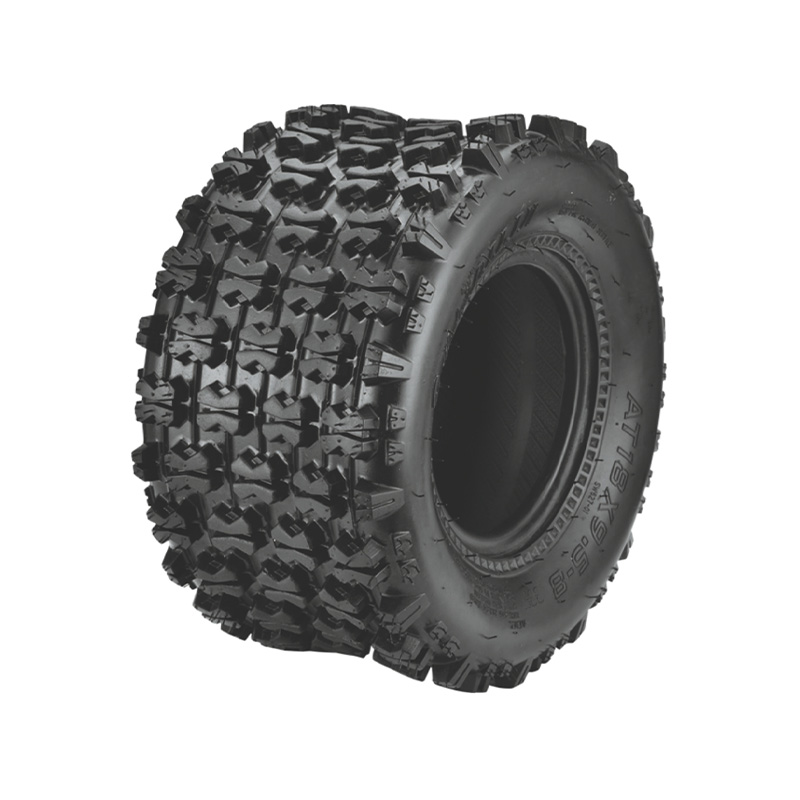
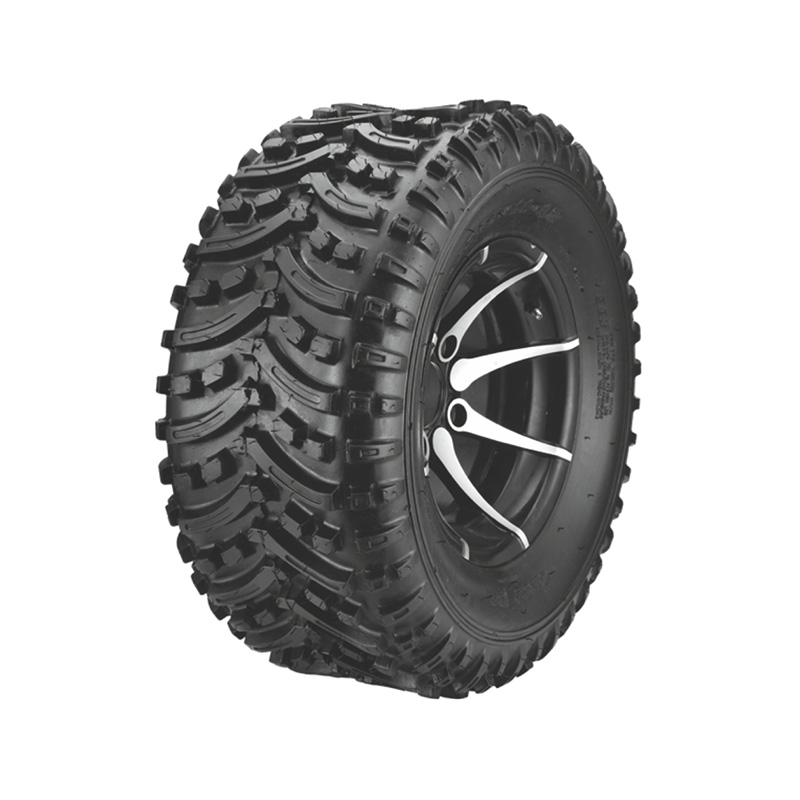
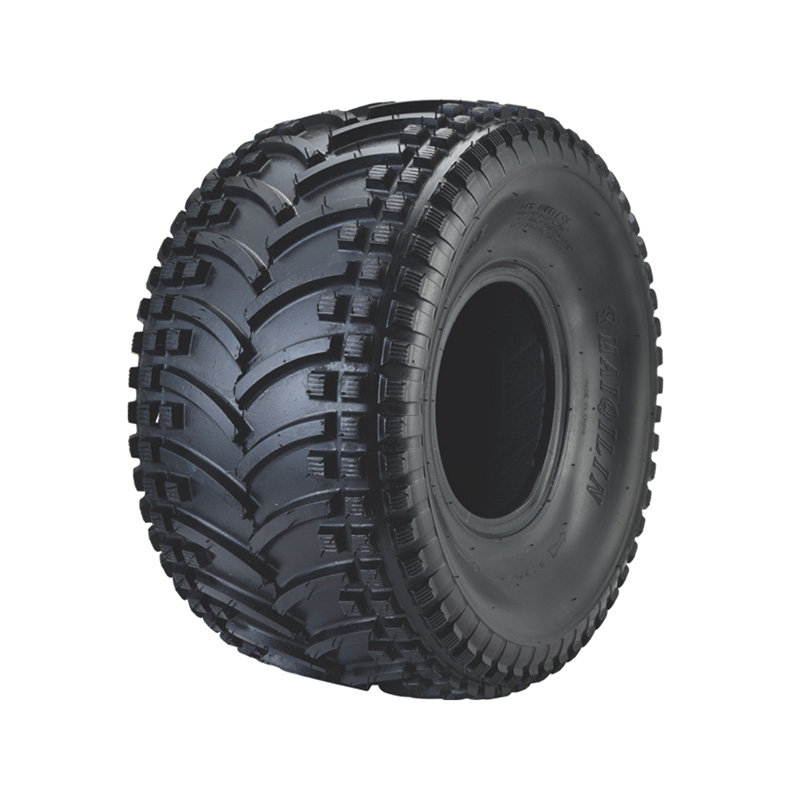
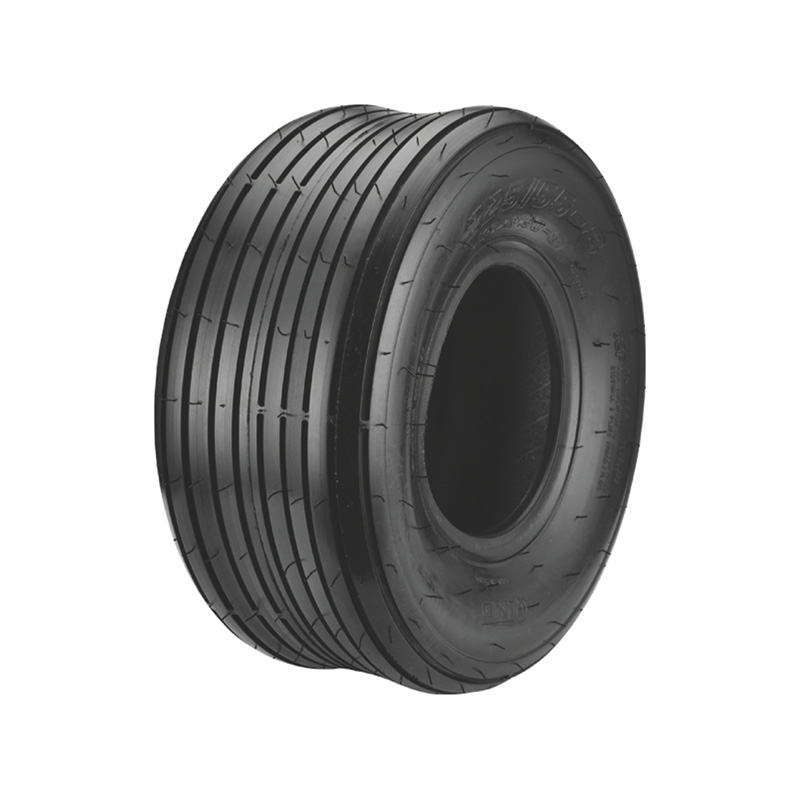
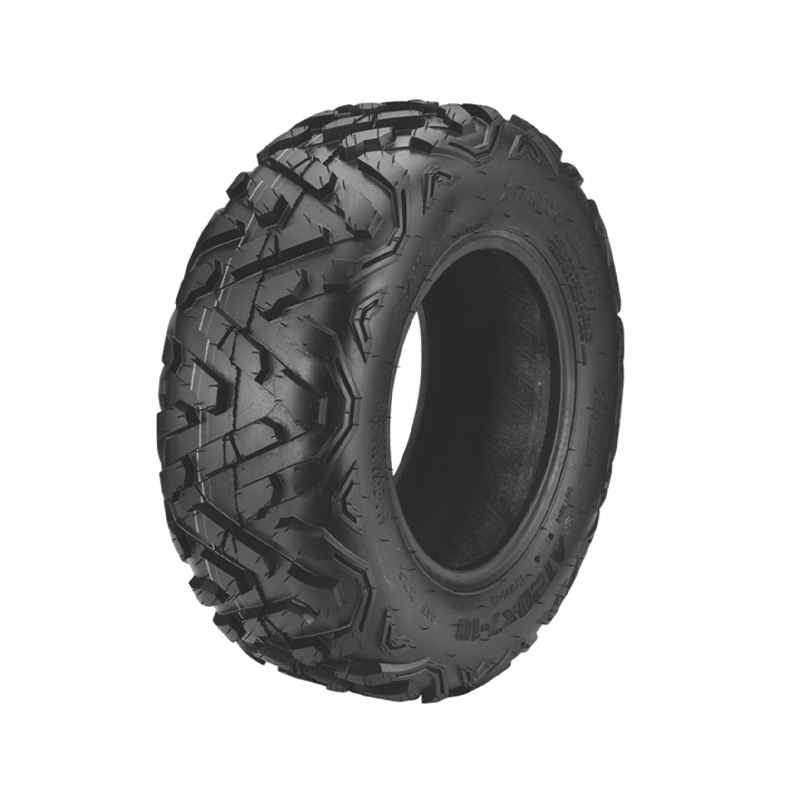
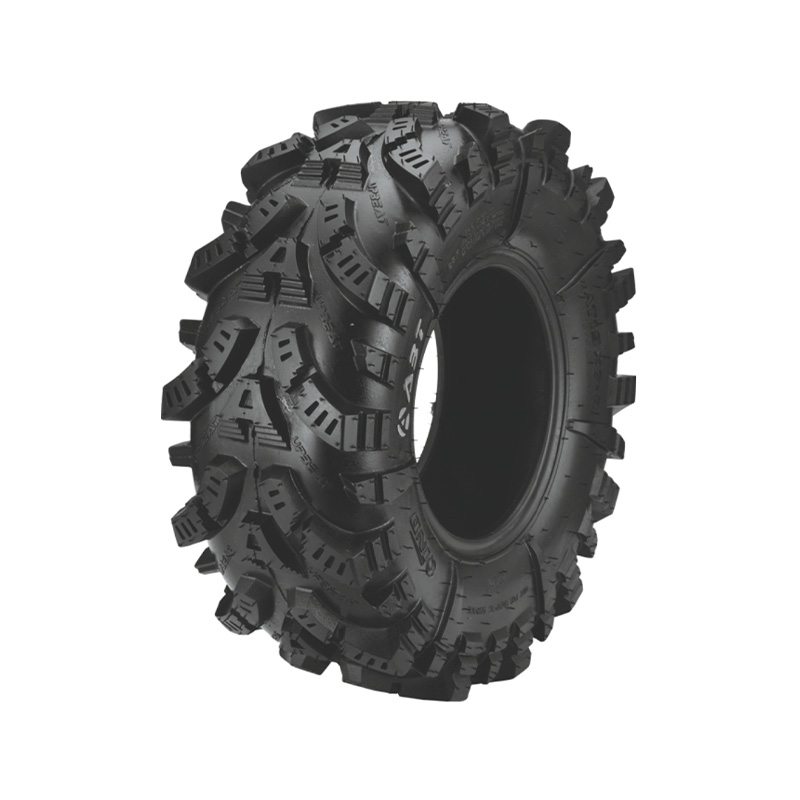
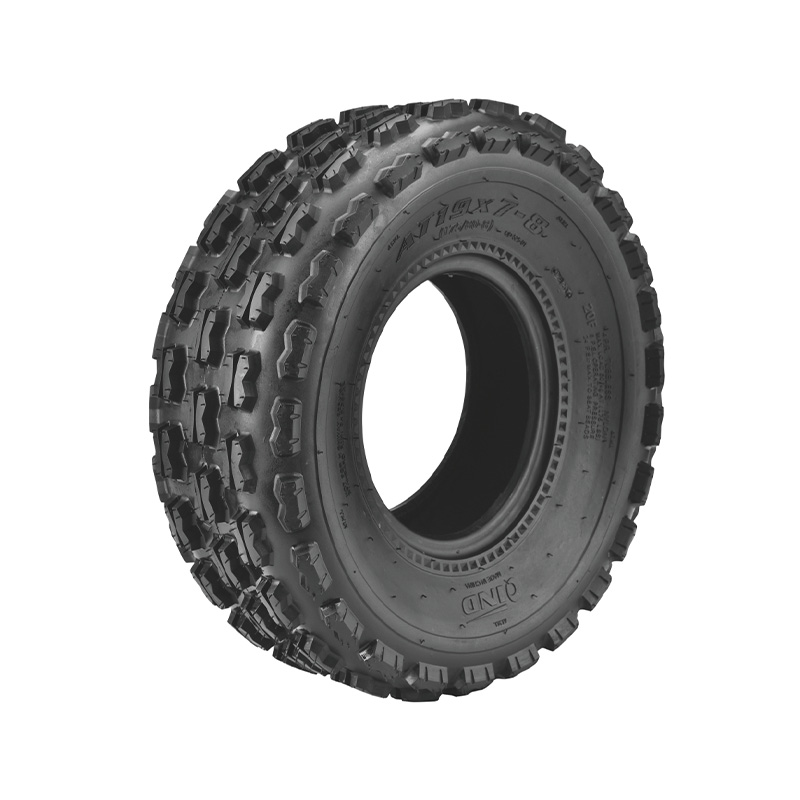
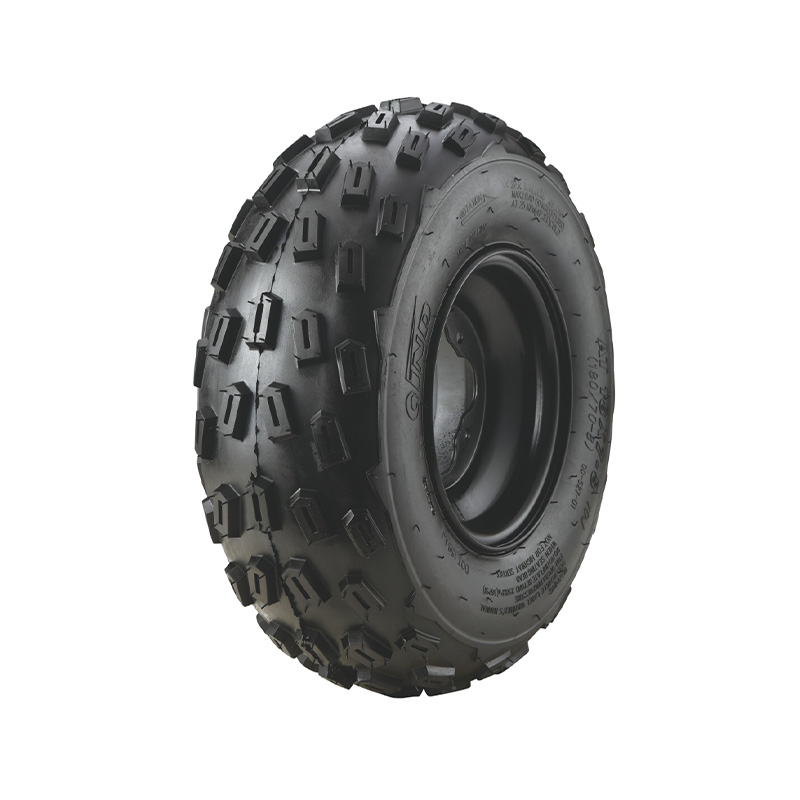
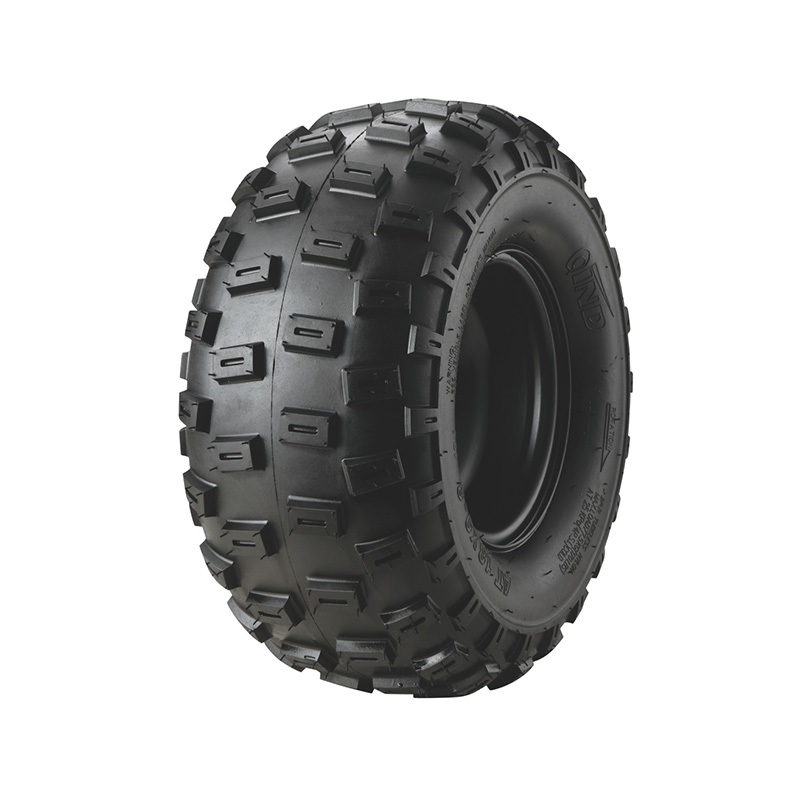
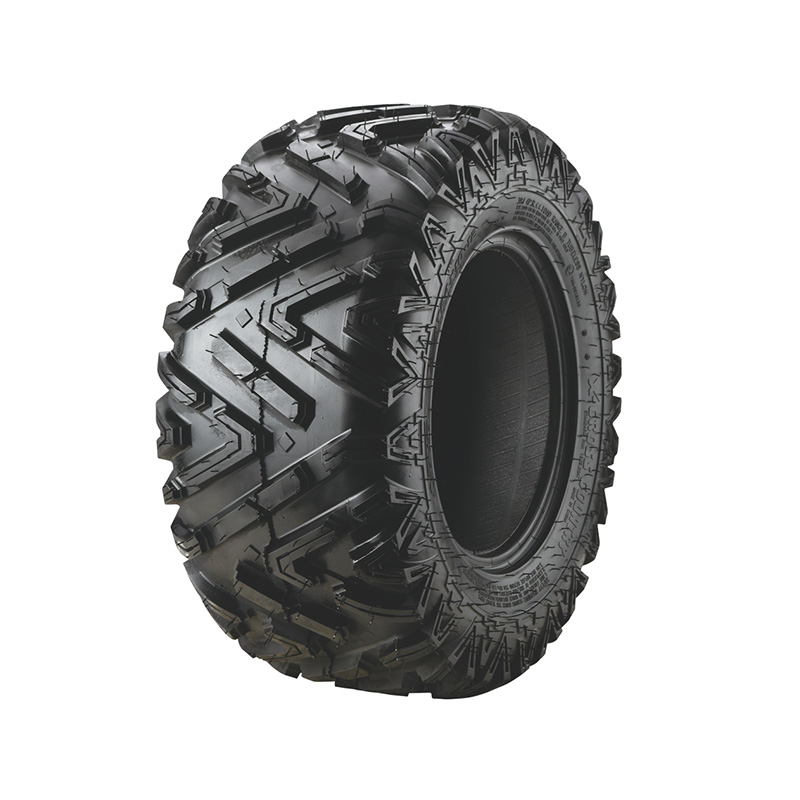
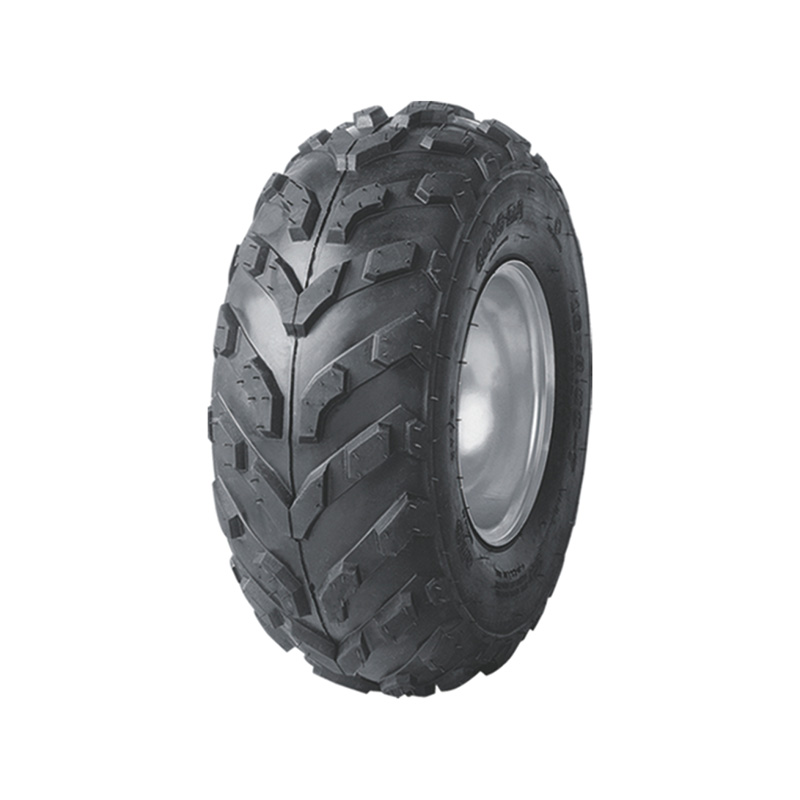
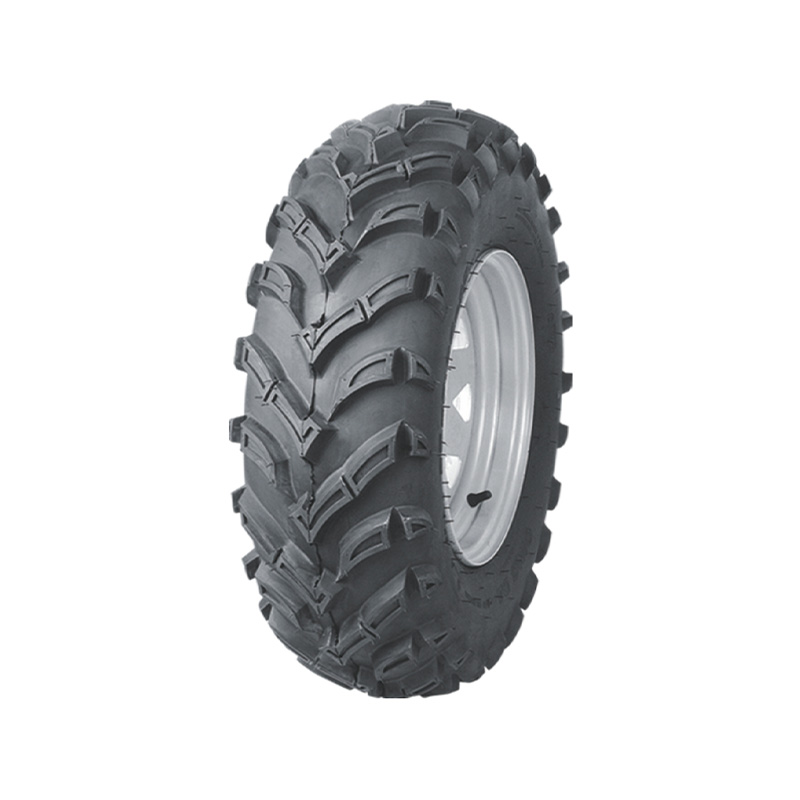
ATV (All-Terrain Vehicle) tires are pneumatic rubber tires specifically designed for four-wheeled all-terrain vehicles and UTVs (Utility Task Vehicles). Unlike ordinary off-road tires, ATV tires must handle both soft (mud, sand) and hard (rock, compacted dirt) terrains, thus requiring specific specifications for tread depth, sidewall reinforcement, tire pressure range, and tire profile design.
Standard ATV tire pressure typically ranges from 3–10 PSI (0.2–0.7 bar), significantly lower than passenger car tires, to increase contact area and improve grip through lower air pressure. Tread width is typically 20–32 inches, and rim diameter is 8–14 inches. Depending on their application, ATV tires are categorized into the following main tread patterns:
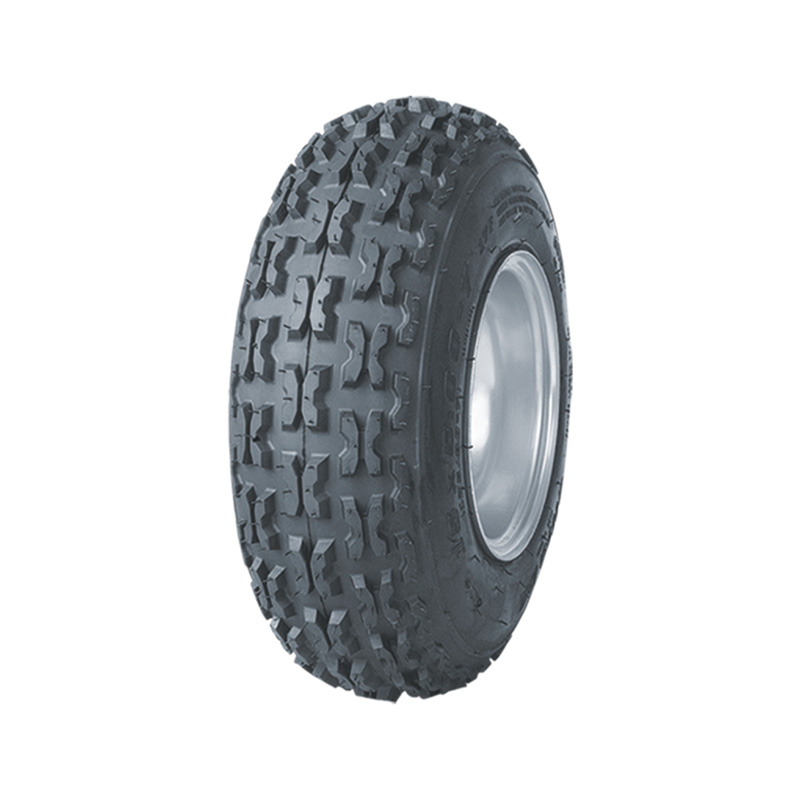
- All-Terrain Universal Tread Pattern: Medium-depth block tread pattern, balancing stability on hard surfaces with grip on soft surfaces, is the mainstream choice for agricultural and patrol ATVs.
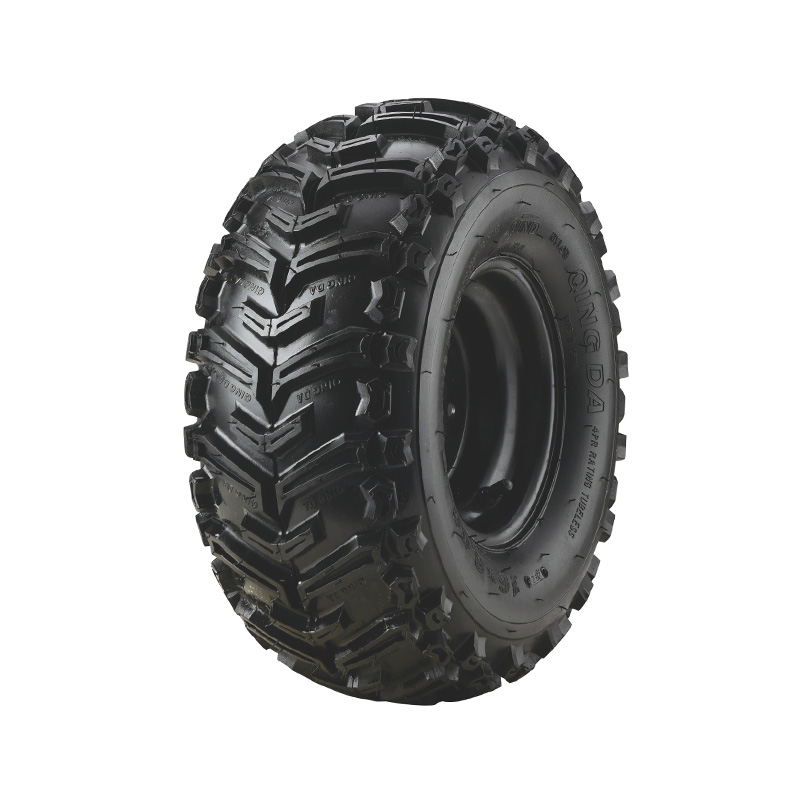
- Mud-Specific Tread Patterns: Wide-spaced, deep-tooth tread pattern with large tread block spacing facilitates self-cleaning and prevents mud clogging. The sidewalls typically have an additional protective layer against lateral tearing.
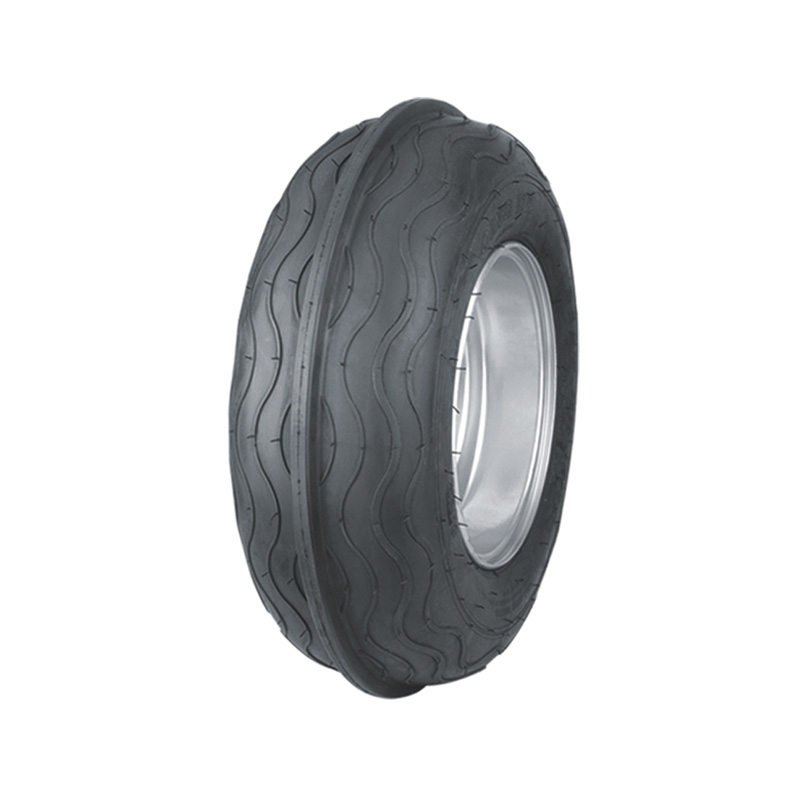
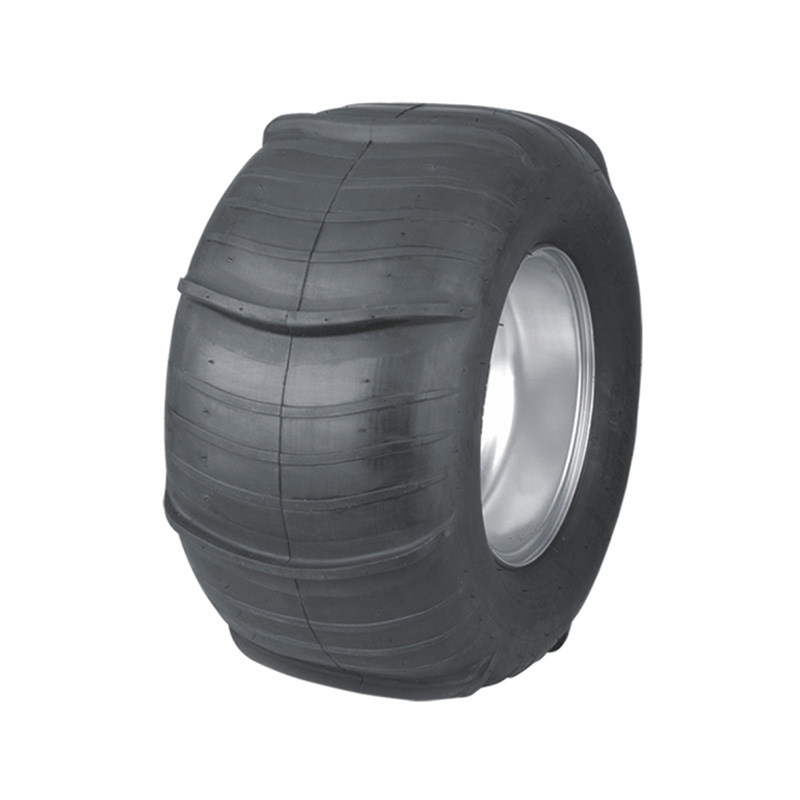
- Sand-Specific Paddle Tread Patterns: The rear tire uses spaced, large paddle blades, while the front tire usually uses smooth or shallow-tread tires. Propelled by paddle blades cutting through sand, specifically designed for desert terrain.
- Hard-Surface Tread Patterns: Dense, shallow-tread pattern, improving handling precision and wear resistance on hard surfaces (rock, compacted gravel), suitable for racing or mountain exploration.
- Note the difference between ATV and UTV tires: UTV vehicles (such as the Polaris Ranger and Can-Am Defender) have a heavier curb weight (typically 500–900 kg), requiring higher tire load indices and should not be used interchangeably with lightweight ATV tires. Always confirm the vehicle model and manufacturer-recommended tire specifications before purchasing.
Key B2B Application Scenarios
Agriculture and Ranch Management
Farmers use ATVs/UTVs for fencing, livestock herding, feed delivery, and pesticide spraying, covering daily distances of 30–80 km, traversing grasslands, muddy field ridges, and gravel paths.
- Recommended: All-terrain tread pattern, 6PR, 25×8-12 or 26×9-14; non-marked formulations optional.
Forestry and Natural Resource Management
Forestry bureaus and logging companies use UTVs for transporting vehicles and patrolling firebreaks on forest trails. The terrain is often characterized by soft humus layers, tree roots, and a mixture of rocks, requiring high resistance to tearing on the sidewalls.
- Recommended: Mud-tread pattern, 8PR reinforced sidewall, 27×11-14
Mining Exploration and Geological Survey
Geological exploration teams use ATVs carrying drilling equipment and sample boxes in roadless areas. Tires need to operate reliably at high altitudes, in low temperatures, and on gravel slopes, and have self-sealing capabilities after inflation (when used with puncture-resistant fluid).
- Recommended: Hard sports tread pattern or all-terrain tires, with Slime puncture-resistant fluid, 26×9-12
Emergency Rescue and Disaster Response
Firefighters and search and rescue teams use ATVs to enter areas impassable by vehicles after floods, earthquakes, and snowstorms. Tires need to provide reliable grip in complex terrains such as mud, water, and debris, and allow for quick replacement and repair.
- Recommended: Mud-tread pattern, foam-filled tires to reduce the risk of punctures
Event Operations and Rental Camps
Off-road event organizers and ATV rental camps need to purchase tires in bulk as consumables, are highly price-sensitive, and require a stable supply cycle to ensure normal camp operation. Annual supply agreements are typically signed.
- Typical purchase volume: 100–500 tires/batch, requiring standardized specifications for easy inventory management.
Why centrally purchase ATV tires from professional suppliers?
1. Significant fragmentation of specifications necessitates professional selection support.
ATV tire marking methods include three formats: imperial three-segment (25×8-12), metric (200/80-12), and a mixed inch format. Different tread patterns, ply ratings, and brands within the same size result in hundreds of SKUs. Professional suppliers provide precise matching queries based on vehicle model, avoiding losses from returns and exchanges due to incorrect purchases.
2. Bulk purchasing significantly reduces per-tire procurement costs.
There is a significant gap between the retail price and the export wholesale price of ATV tires. For buyers such as farms, campsites, and government procurement with annual consumption exceeding 50 tires, purchasing from the original manufacturer or primary distributors through framework agreements can typically yield prices 25–40% lower than retail channels (the specific percentage depends on the brand and specifications).
3. Compliance Certification is a Key Threshold for Government and Military/Police Procurement
The US government requires DOT (FMVSS 571.119) certification for procurement; the EU market requires compliance with ECE R75 regulations; and some countries' military/police procurement also requires ISO 9001 quality management certification and certificates of origin (Form A / EUR.1). Choosing suppliers with relevant certifications can effectively simplify the procurement compliance process.
4. OEM Customization and Branding Meet Branding Needs
ATV manufacturers (OEMs) and large rental camp chains typically require tires to bear their own brand logo to strengthen brand image and after-sales traceability. Professional tire manufacturers can provide customized mold sidewall lettering, tread pattern adjustments, and packaging printing; the MOQ is typically 500–1,000 tires.
5. Stable Inventory and Supply Cycles Ensure Business Continuity
Demand often surges during peak agricultural seasons, rainy season relief efforts, and before the start of the season; last-minute procurement can easily to stockouts or excessively long delivery times. Signing annual stocking agreements with suppliers (VMI, Vendor Managed Inventory) ensures that core specifications are always in stock, and urgent needs are fulfilled within 3–5 business days.
Frequently Asked Questions
How to read the ATV tire specification "25x8-12"? How is it different from passenger car tire specification?
ATV tires typically use a three-segment imperial system:
25 × 8 - 12: Outer diameter 25 inches × Tread width 8 inches - Rim diameter 12 inches.
This is completely different from the metric specification of passenger car tires (e.g., 225/55R17): Passenger car tires use section width (mm)/aspect ratio (%)/rim diameter (inches). ATV tires directly indicate the outer diameter, allowing buyers to intuitively assess the overall tire size's impact on vehicle ground clearance and speed ratio.
Some UTV wide tires also use metric specification; pay attention to the specification format when purchasing, as different formats cannot be directly converted and compared. It is recommended to use rim diameter and tread width as the baseline for parameter alignment.
Are the front and rear ATV tires the same size? Can they be used interchangeably?
More ATV tires have different front and rear tire sizes and a clear directional design:
- Front tires: Narrower (e.g., 25×8-12), for steering, emphasizing precise handling, usually with shallower tread patterns.
- Rear tires: Wider (e.g., 25×10-12), for drive, requiring stronger grip, with deeper tread patterns.
Interchanging front and rear tires (especially those with directional arrow markings) will significantly reduce grip and water drainage, and cause uneven wear. Mixing is strictly not recommended. Always order separately for front and rear tires and confirm the directional markings (arrows or the word "ROTATION").
How should ATV tires be stored and their shelf life managed? How long can stockpiling affect their use?
The main factors contributing to rubber tire aging are ozone, ultraviolet radiation, heat, and deformation. Under proper storage conditions:
- Storage environment: Protect from light, dry, and well-ventilated; temperature 0–25°C; humidity < 75% RH; keep away from ozone sources (electric motors, welding equipment).
- Storage method: Stack vertically (no more than 4 layers) or lay flat no more than 1.2 m high to avoid side-hanging and tire deformation.
- Recommended shelf life: According to the European Rubber Industry Association (ETRTO), tires are good used within 5 years of the production date, and no more than 10 years (the production week/year can be read from the last 4 digits of the DOT code on the sidewall, e.g., 2324 = week 23 of 2024).


 English
 中文简体
中文简体
 Español