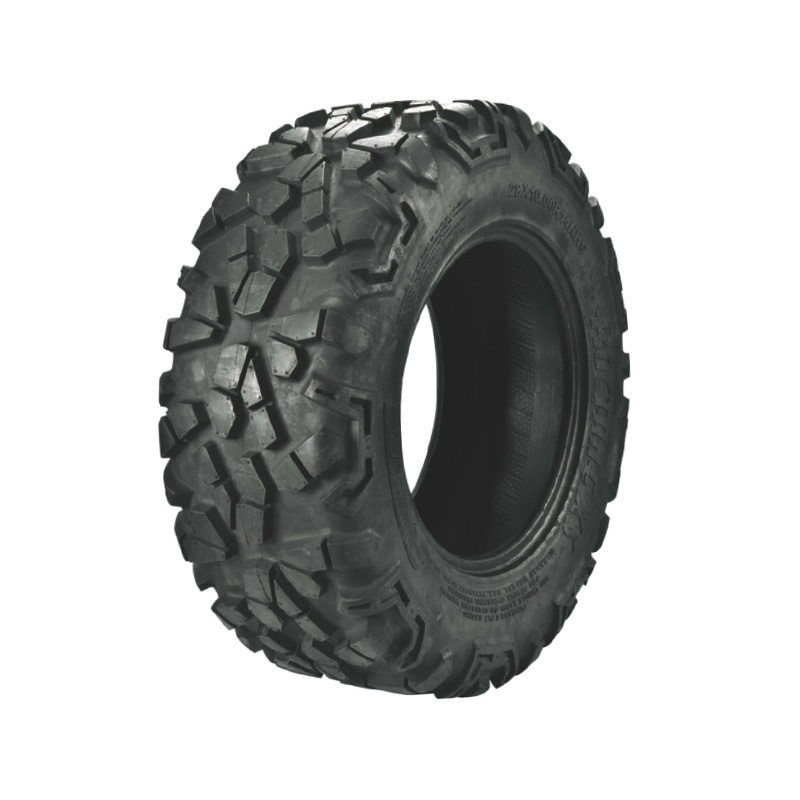
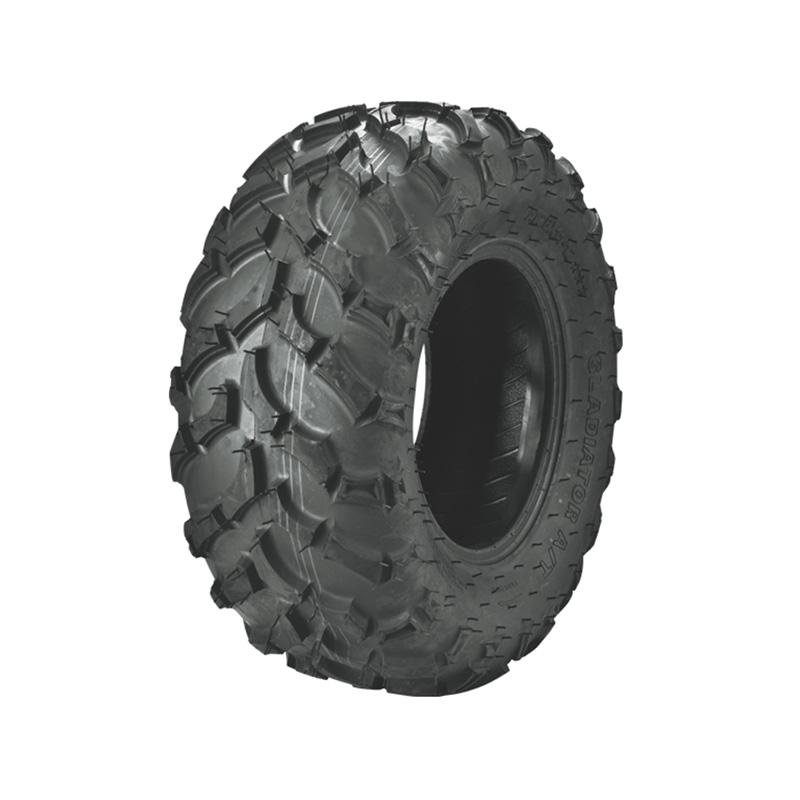
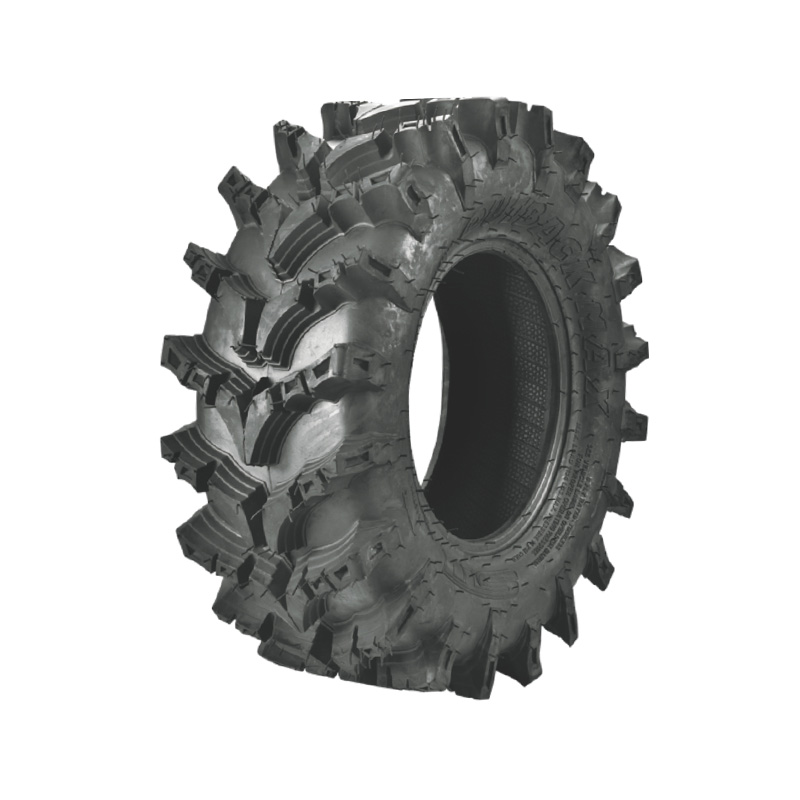
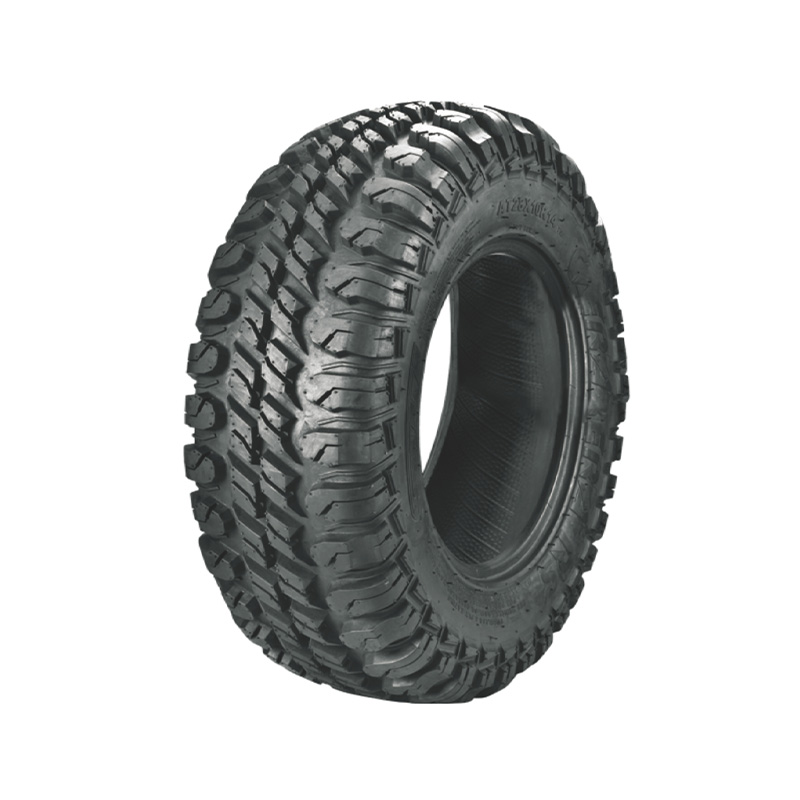
A UTV (Utility Task Vehicle) is a type of all-terrain vehicle where the driver and passenger sit side-by-side and are equipped with rollover protection frames (ROPS). Representative brands include Polaris Ranger, Can-Am Defender, John Deere Gator, and Yamaha Wolverine. Unlike single-person straddle-type ATVs, UTVs are typically 1.2–1.8 m wide, have a curb weight of 400–900 kg, and a payload of 600–1,000 kg, thus placing higher demands on tire load capacity, carcass rigidity, and durability.
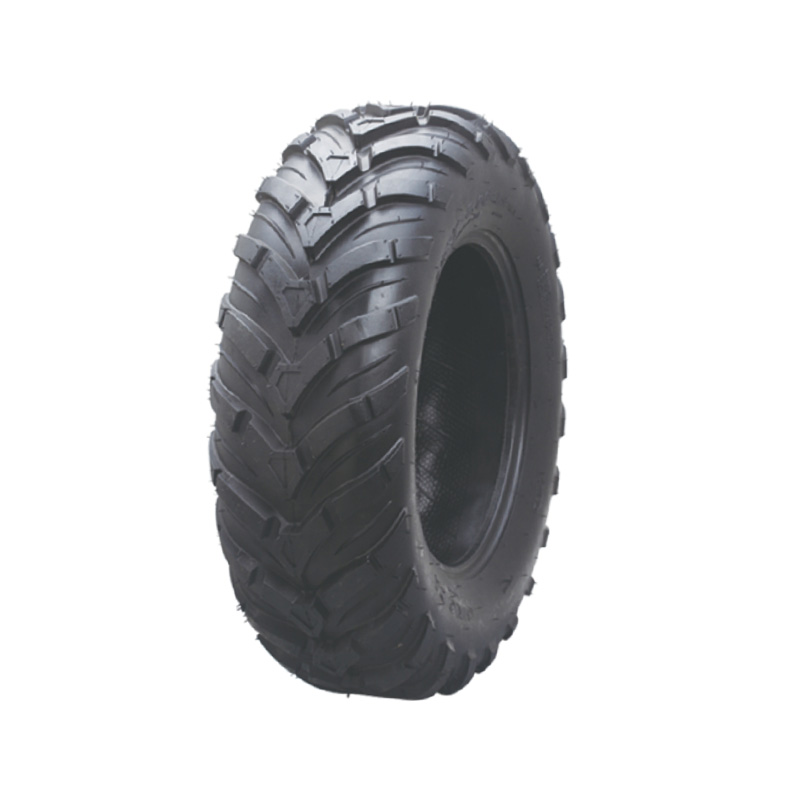
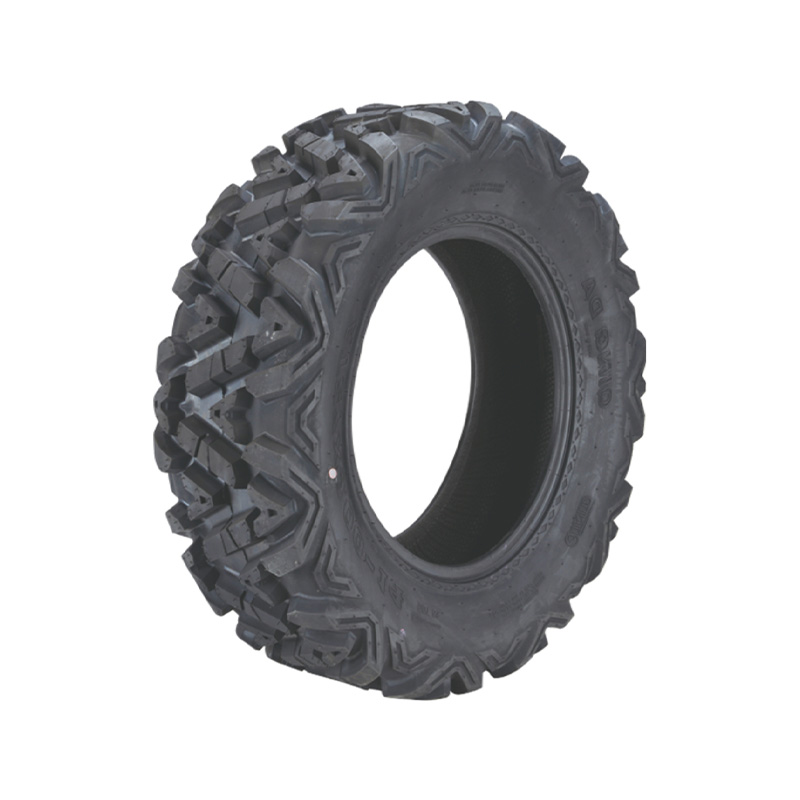
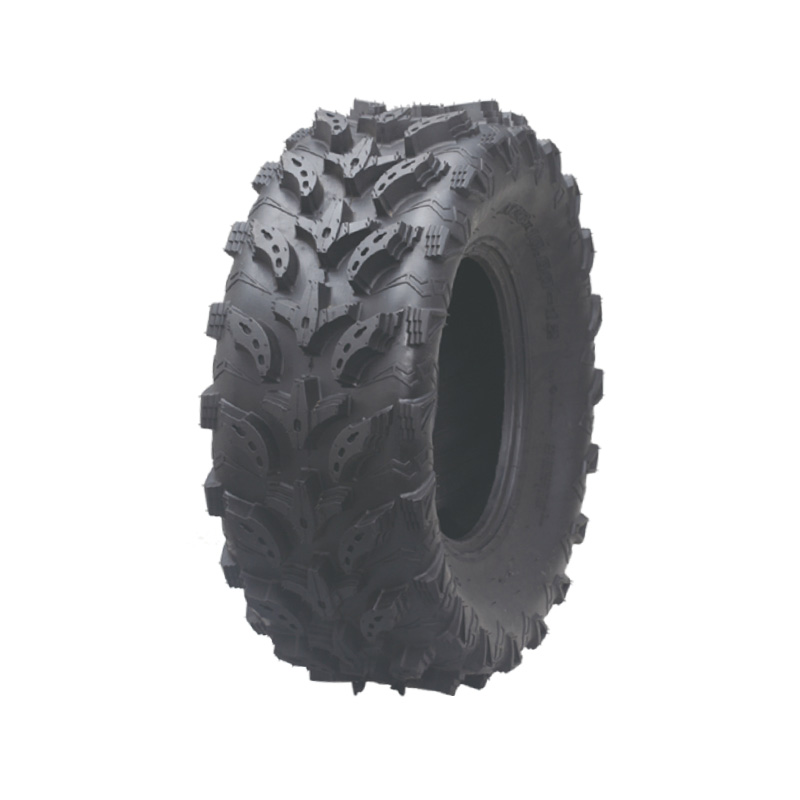
The core design goal of multipurpose UTV Tyres is to handle a variety of typical working terrains without changing tires—a stark contrast to the "extremely single-scenario" strategy of dedicated mud or sand tires. Typical features include:
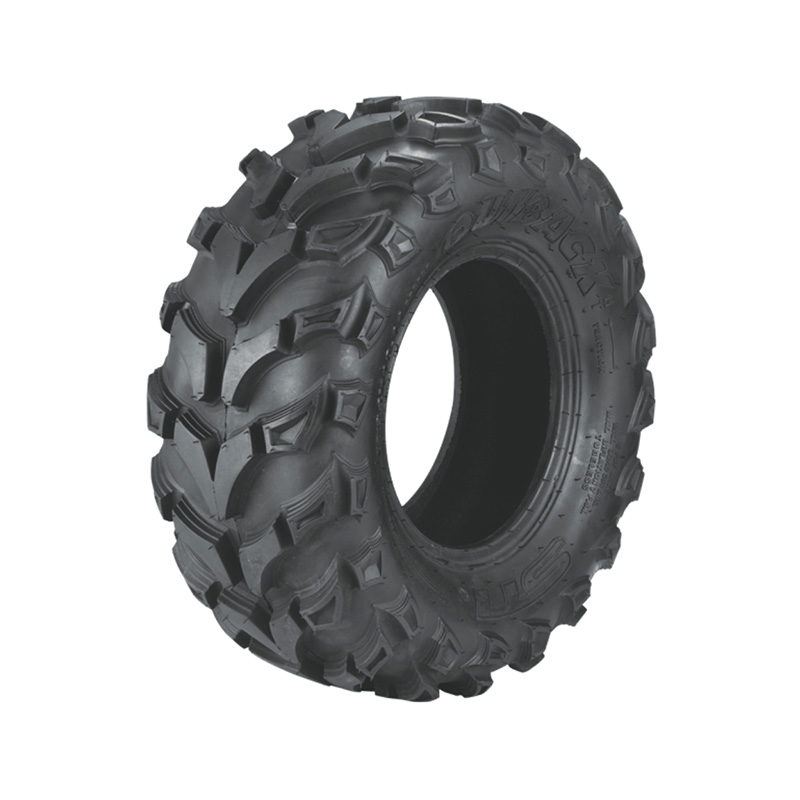
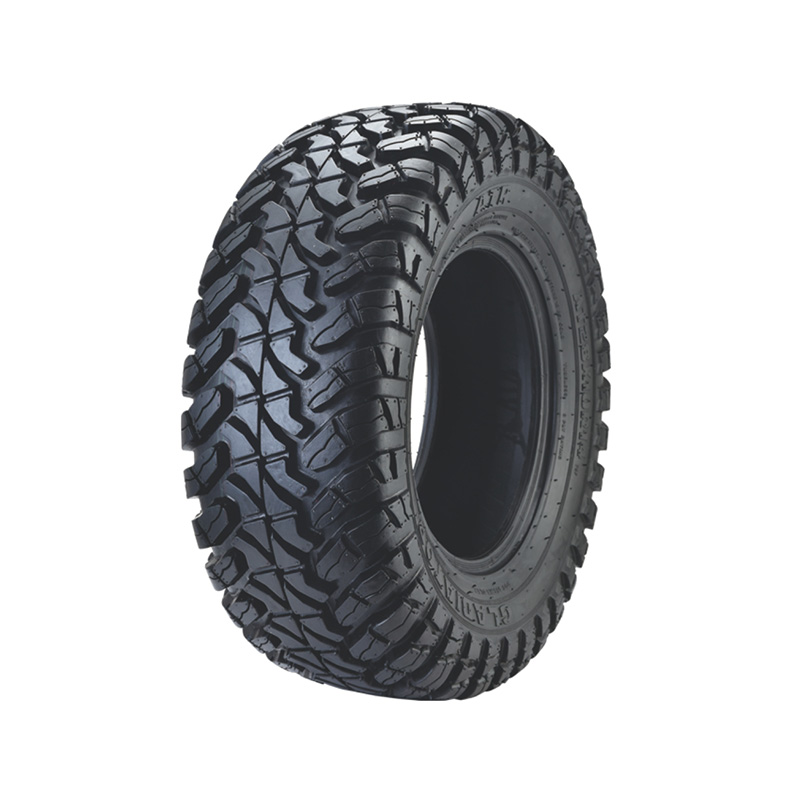
- Multi-directional block tread pattern: The tread blocks are arranged in an alternating pattern, balancing forward, braking, and lateral grip. Tread depth is typically 16–24 mm, falling between all-terrain tires and mud tires, balancing mud shedding and stability on hard surfaces.
- Reinforced sidewall structure: 6PR to 10PR ply, some models feature a double-belt design, with an additional rubber protective layer on the sidewall to resist lateral impacts and cuts from rocks, tree stumps, etc.
- High load index design: A single tire load index typically corresponds to 400–700 kg, with a total load capacity of 1,600–2,800 kg (vehicle weight + cargo + occupants) across all four wheels, meeting the requirements of UTV heavy-duty operations.
- Wide tire pressure range: Recommended tire pressure is typically 8–20 PSI, adjustable in real-time according to terrain: lower pressure on soft ground to increase contact area, and raise pressure on hard surfaces to reduce wear, offering significantly greater flexibility than fixed-pressure industrial tires.
- UTV tires and ATV tires are not interchangeable: UTVs have a much higher vehicle weight and load capacity than ATVs, and therefore different tire ply ratings and load indices. Using tires with incompatible ply ratings carries a risk of sidewall blowouts. Always check the manufacturer's recommended ply rating in the vehicle manual before purchasing.
Main B2B Application Scenarios for Multipurpose UTV Tyres
Large Farm and Ranch Operations
UTVs are the core transportation tool for farm operations, handling tasks such as feed delivery, transporting fence repair materials, and towing spraying equipment. They typically travel 40–100 km per day, traversing grasslands, irrigation ditches, and gravel roads.
- Recommended: All-terrain multipurpose tread pattern, 8PR, 27×11-12; 10PR for load-priority applications
Forestry and National Park Management
Forestry personnel use UTVs to transport firefighting equipment, patrol firebreaks, and conduct forest surveys. The terrain is often soft humus soil with winding tree roots along forest trails, making sidewall cut resistance a key performance characteristic.
- Recommended: Reinforced sidewall 8PR, 27×9-14, used with puncture-resistant sealant
Industrial and Mining Enterprise Internal Transportation
Large mines, oil and gas fields, wind farms, etc., use UTVs as shuttle and equipment transport tools within the factory area. Road surfaces often contain gravel and metal scrap, requiring tires with high puncture resistance and long service life.
- Recommended: Hard-surface multi-purpose tread pattern, 10PR, 30×9-14; can be paired with inflatable tires.
Emergency Rescue and Disaster Response
After floods, earthquakes, and snowstorms, UTVs are the preferred rescue equipment for areas inaccessible to heavy vehicles. They need to operate continuously on muddy, flooded, and rubble surfaces, requiring extremely high reliability with zero-explosion tires.
- Recommended: Mud-surface multi-purpose tread pattern or inflatable tires, 8PR, 27×11-12
Resorts, Golf Courses, and Parks
Scenic spots, golf courses, and university campuses use UTVs as shuttle tools. Lawn protection is a core requirement; tires need a wide tread with low air pressure to disperse pressure while avoiding leaving marks that damage the lawn.
- Recommended: Wide tread depth, non-marking compound, 25×10-12, tire pressure 8–10 PSI
Why Choose a Professional UTV Tire Supplier?
1. UTVs carry significantly more loads than ATVs; incorrect tire selection directly increases safety risks
A fully loaded UTV (vehicle weight + cargo + passengers) can weigh 1,500–2,200 kg. If 4PR ATV tires are mistakenly installed, the sidewall stress will exceed design limits during a downhill steep turn when fully loaded, greatly increasing the risk of tire blowout and rollover.
2. "Multi-purpose" design reduces the number of spare tire SKUs and simplifies inventory management
For organizations such as farms, forestry bureaus, and mining areas that own multiple UTVs, equipping each vehicle with a different tread pattern tire for different terrains would exponentially increase the number of spare tire SKUs. Multipurpose UTV tires, with a single tire model covering 80% of common terrains, can reduce spare tire inventory SKUs from 6-8 to 2-3, significantly reducing warehousing and capital tied up.
3. Government and State-Owned Enterprise Procurement Must Meet Compliance Certification Requirements
The US federal and state governments must ensure that UTV parts procured meet the quality standards stipulated in the FAR (Federal Acquisition Regulation), and tires must have DOT FMVSS No. 119 certification; EU public procurement requires ECE R75 certification. Some countries' state-owned enterprises also require ISO 9001 factory certification and SGS/BV test reports. Relevant documents should be obtained from suppliers in advance during procurement to ensure audit compliance.
4. Strict Consistency Requirements for Original Equipment Manufacturers (OEMs)
UTV OEMs (such as emerging domestic UTV manufacturers exporting via OEM) have strict requirements for the consistency of tire outer diameter tolerances (typically ±1%), dynamic balance, and tread depth to ensure stable vehicle factory test performance.
5. Global Supply Chain Support and Rapid Response Capabilities
During peak agricultural seasons (planting/harvest) and natural disaster relief, the demand for UTV tires can surge in a very short time. Searching for supplies on short notice can easily to stockouts, counterfeit products, or inconsistent quality. Partnering with suppliers who have overseas stocking capabilities or VMI services allows for delivery of core specifications within 24–72 hours, avoiding operational disruptions due to tire shortages.
Frequently Asked Questions
What do 6PR and 8PR mean on the sidewall of a UTV tire? Is a higher ply rating always better?
PR (Ply Rating) is an indicator of tire carcass strength and load-bearing capacity. A higher number indicates a thicker carcass and a higher load capacity. However, "the higher the better" is not accurate: Higher ply ratings mean stiffer and heavier tires, which can to increased sinking on soft surfaces (mud, grass), actually reducing grip. Excessively high ply ratings can also increase fuel consumption (electricity consumption) and driver fatigue.
For primary use on grass and soft soil in farms → 6PR is usually sufficient; for rocky terrain, mining areas, and heavy-duty towing → 8PR or 10PR is more suitable.
The correct approach is to refer to the "Max Ply Rating" recommendations in the vehicle manufacturer's manual and choose the ply rating within the recommended range based on the primary terrain, rather than blindly pursuing the high ply rating.
How much worse is the mud performance of multi-purpose UTV tires compared to dedicated mud tires?
This is the more common choice and trade-off question. The core differences lie in tread depth and tread block spacing: Dedicated mud tires (such as ITP Mud Lite XTR and Maxxis Mudzilla) have wider tread block spacing and a tread depth of 24–30 mm, offering self-cleaning capabilities and being 1.5–2 times more efficient at digging and removing mud in deep mud than multi-purpose tires.
Multi-purpose UTV tires have a tread depth of approximately 16–22 mm, performing well in light to moderate mud (mud layer < 15 cm), but their tread is prone to clogging and slipping when encountering deep mud pits. On the other hand, multi-purpose tires are quieter, wear more evenly, and offer better cornering stability on hard surfaces (compacted dirt roads, gravel roads, lawns).
If more than 70% of the work environment is deep mud, dedicated mud tires offer better value; if the terrain is varied, multi-purpose tires are the more suitable choice.
Are foam-filled tires suitable for UTVs? What are their advantages and disadvantages compared to regular pneumatic tires?
Foam-filled tires are made by injecting polyurethane foam into the air cavity of a regular pneumatic tire, eliminating the risk of a blowout.
UTV Applicability Analysis:
- Advantages: Completely eliminates the risk of a blowout, making them extremely valuable in environments with many sharp objects, such as gravel mines and scrap metal yards; No need for regular pressure checks and replenishment, reducing daily maintenance workload; Enhanced lateral support, providing slightly better stability during sharp turns than pneumatic tires.
- Disadvantages: Significantly increased weight (typically 5–10 kg per tire), increasing the burden on the drivetrain and suspension; Inability to adjust tire pressure according to terrain, resulting in poorer shock absorption on soft ground compared to adjustable-pressure pneumatic tires; Cannot be removed after filling (high cost of disposing of used tires); High heat generation at high speeds (above 40 km/h), unsuitable for long-distance highway driving.
Overall recommendation: Filler tires are the choice for scenarios with zero tolerance for tire blowouts, such as mining areas, junkyards, and emergency rescue; while pneumatic tires are still the main choice for scenarios such as agriculture and forestry that require frequent changes in terrain and prioritize driving comfort.


 English
 中文简体
中文简体
 Español