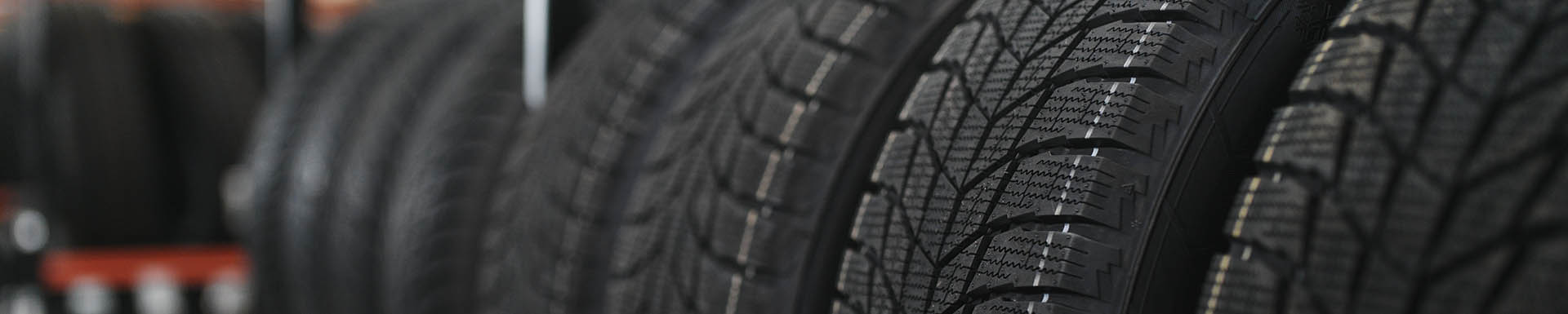
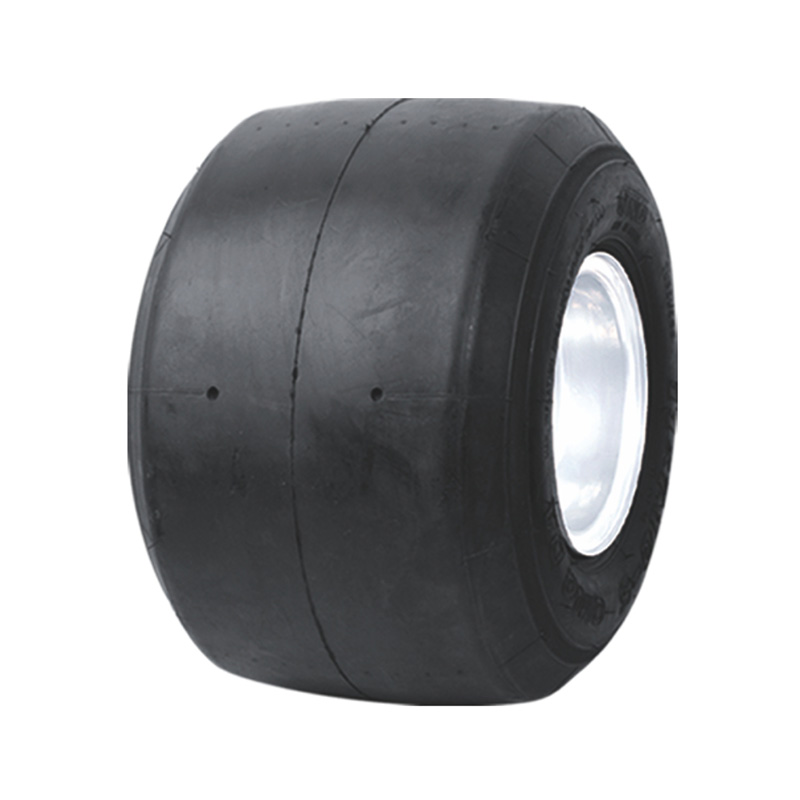
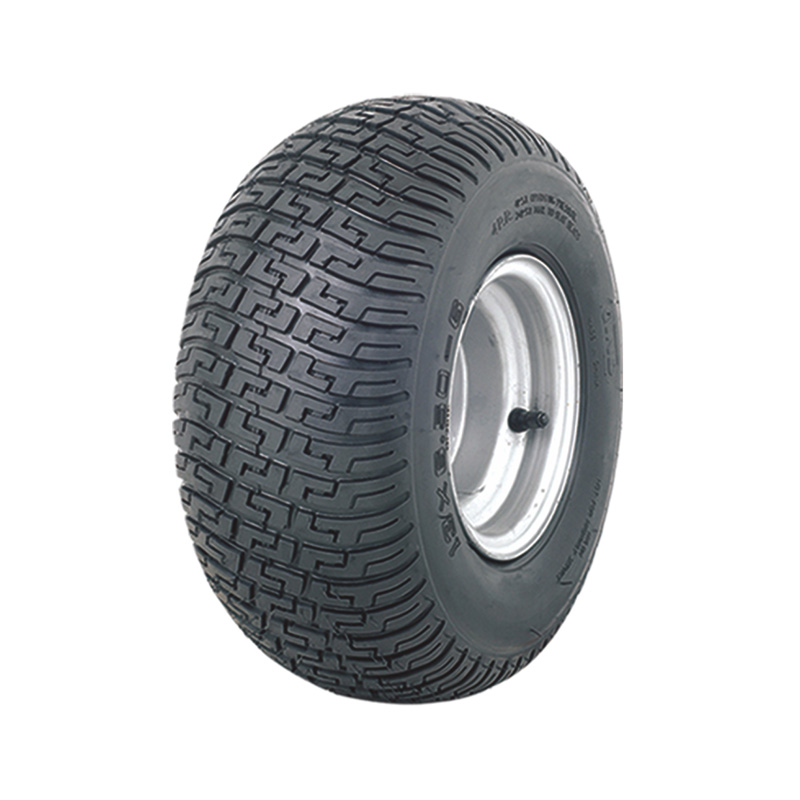
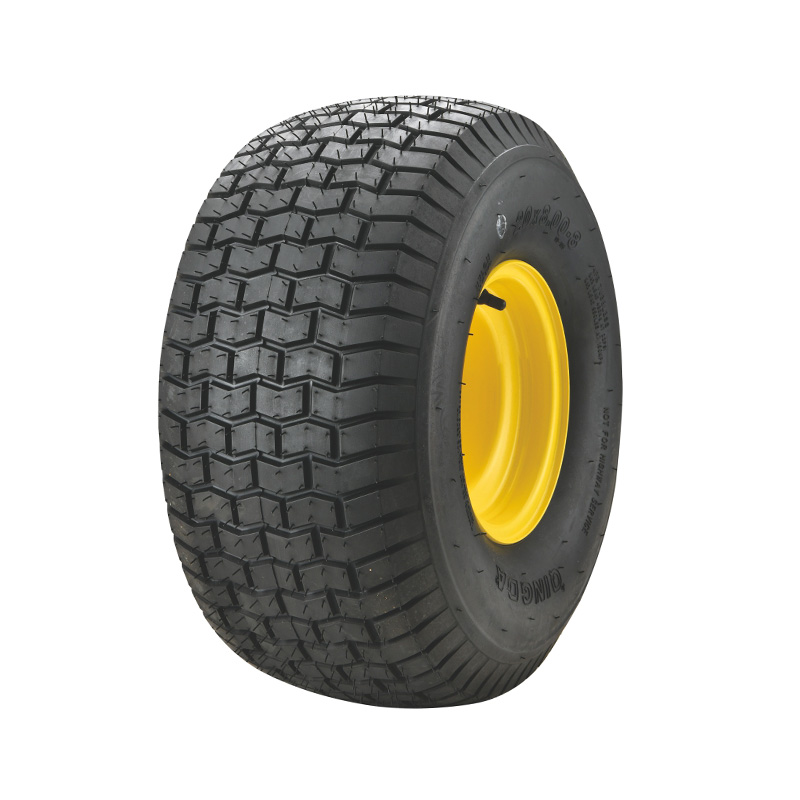
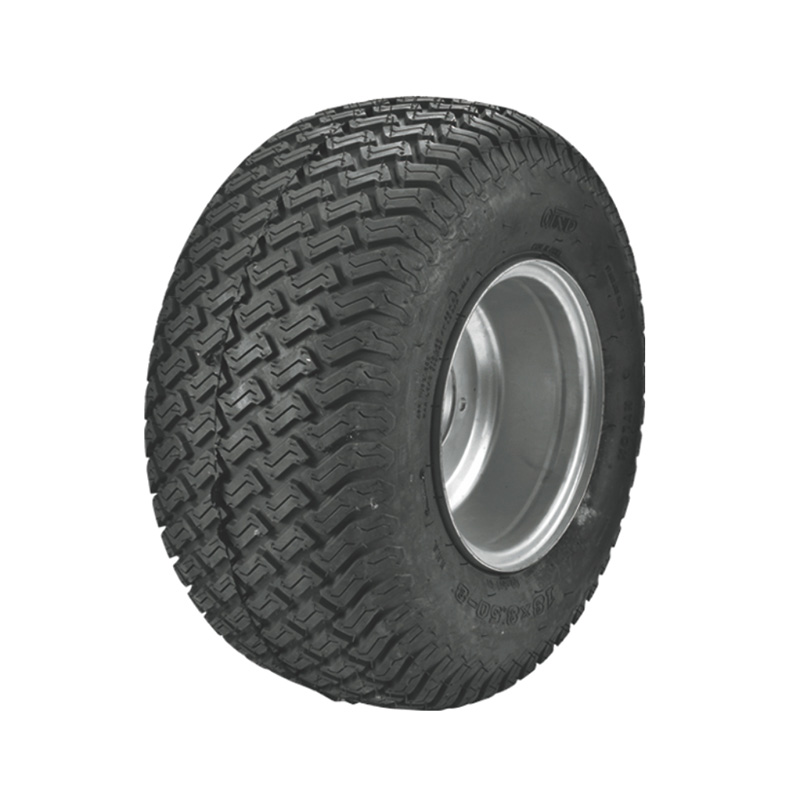
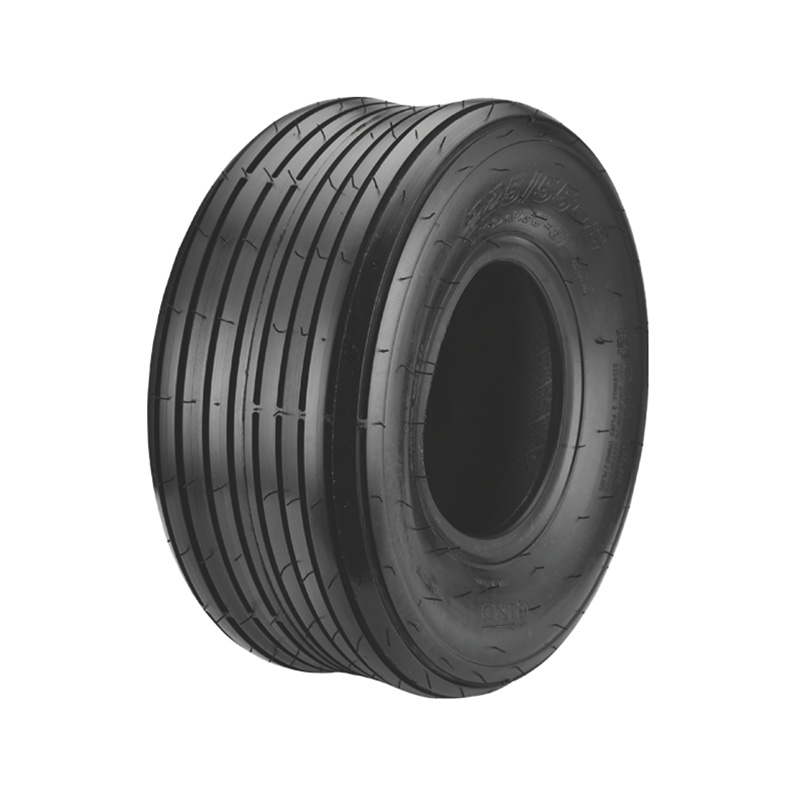
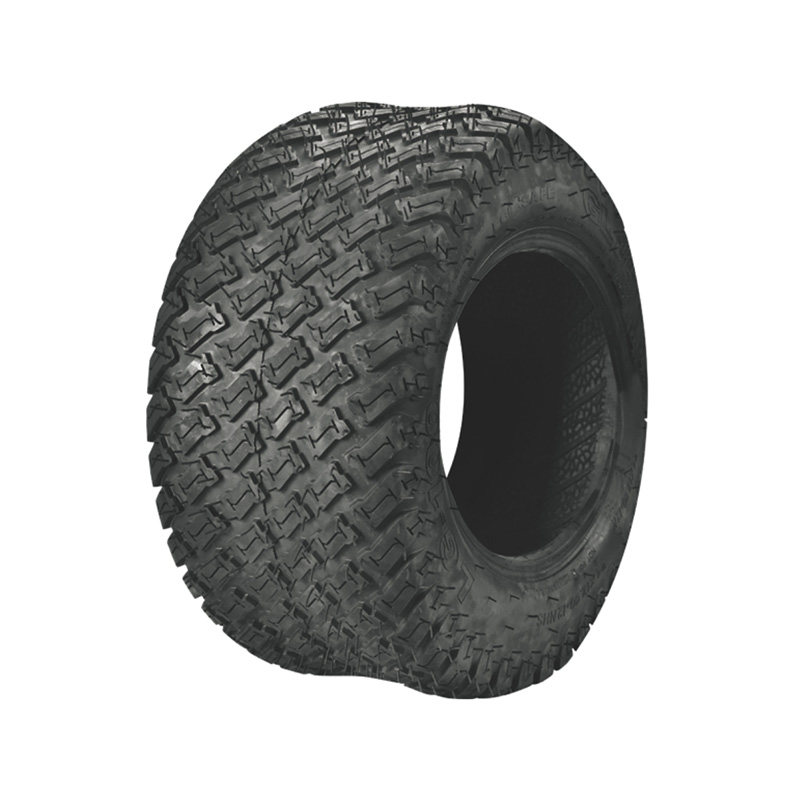
Lawn mower tires are specialized tires designed for lawn mowing equipment such as lawn mowers, riding mowers, zero-turn mowers, garden tractors, and golf carts. Unlike industrial or agricultural tires, the core mission of lawn mower tires is to provide stable traction, steering agility, and load support while protecting the lawn from damage.
The more distinctive feature of lawn mower tires is their tread pattern—a wide-spaced, shallow stripe or herringbone pattern combined with rounded shoulder design. This design isn't for off-road grip, but rather to achieve: Extremely low ground pressure: Increasing the contact patch to evenly distribute the machine's weight, preventing deep ruts or damage to grass roots on wet lawns.
- Minimize lawn damage: Rounded tire shoulders reduce "scratching" during turns, protecting the turf's integrity.
- Balance traction and steering: Providing sufficient grip on slopes and slippery grass while maintaining the lawnmower's maneuverability even when turning.
Application scenarios: Where are lawnmower tires used?
1. Professional Lawn Maintenance and Golf Course Maintenance
- Golf Green/Fairway Maintenance: Requires tires to operate on extremely fine lawns without leaving any marks or ruts.
- Football/Russian/Cricket Field Maintenance: Requires continuous operation of large ride-on lawnmowers, with tires needing to withstand prolonged, high-frequency use.
- Municipal Parks and Landscaping: Large-scale mechanized mowing of urban public green spaces.
2. Commercial Property Management and Landscape Engineering
- Corporate/Industrial Park Lawn Maintenance: Regular mowing of large areas of leveled lawns.
- Commercial Real Estate (Shopping Malls, Hotels, Resorts) Landscape Maintenance: Requires both operational efficiency and lawn aesthetics.
- Cemetery/Mausoleum Maintenance: Requires quiet and stable operation.
- Airport Lawn Management: Maintenance of grass around runways, with strict requirements regarding the risk of foreign object fallout from tires.
3. Agriculture and Ranching Operations
- Ranchland Harvesting/Grazing Area Maintenance: Tractor-drawn mowing equipment.
- Silage Harvesting: Large mower-conditioner tires.
- Orchard/Vineyard Row Work
4. Hand-push and walk-behind lawnmowers
Typical applications:
- Home lawns (typically << 1000 square meters)
- Professional gardener's precision mowing
- Repairing in narrow spaces/corner areas
Why do B2B buyers need professional lawnmower tires?
1. Lawn protection = Customer satisfaction = Business reputation
For B2B clients such as golf courses, stadiums, and high-end properties, lawn damage is unacceptable. Using non-professional tires (such as ordinary agricultural or industrial tires) can lead to:
- Overly deep and hard tread patterns that "scrape" the turf when turning, creating bare patches.
- Uneven ground contact pressure, leaving permanent ruts and affecting the smoothness and appearance of the lawn.
- Repair costs reaching tens of thousands of dollars in delicate areas like putting greens. Professional lawn tires with a Turf-Friendly design (such as Carlisle Turf Armor's "all-ground contact" tread pattern) ensure even ground contact pressure, lawn protection.
2. Equipment Compatibility and Fleet Standardization
Commercial lawn care companies typically have a fleet of lawnmowers of multiple brands and models. Purchasing standardized professional tires can achieve:
- Bulk purchasing cost advantages: Reduced SKU complexity and lower inventory management costs.
- Rapid replacement response: Standardized specifications mean that tire failures on any equipment can be quickly replaced with stock.
Common Issues in Lawn Mower Tire Procurement
Q1: How to choose between pneumatic, foam-filled, and airless tires?
A:
- Choose pneumatic tires: For budget-sensitive users, those operating in relatively mild environments, and those with the ability to perform regular maintenance. Lowest cost, good shock absorption, but requires regular pressure checks and maintenance.
- Choose foam-filled tires: Rental companies, multi-user shared equipment, remote work sites. Completely eliminates tire blowouts, but increases weight and slightly reduces shock absorption.
- Choose airless/tweel tires: High-end commercial users, golf courses, scenarios with zero tolerance for downtime. Lifespan is 2-3 times that of pneumatic tires, zero maintenance, but high initial cost.
Q2: What does "PR" (ply rating) mean in tire specifications? How to choose between 4PR and 6PR?
A: PR (Ply Rating) indicates the tire's load capacity and structural strength; the higher the number, the more durable it is.
- 2-4PR: Light-duty household/push lawnmowers, load << 500kg
- 6PR: Medium-duty commercial ride-on lawnmowers, standard commercial applications (e.g., 20x8.00-8 6PR is the mainstream configuration)
- 8-12PR: Heavy-duty commercial/agricultural lawnmowers, high load capacity, harsh working conditions (e.g., 31x13.50-15 12PR can carry up to 3520 lbs)
Q3: Should I purchase a complete tire assembly (Tire + Wheel/Rim Assembly) or individual tires?
A: Tire assemblies are more suitable for B2B bulk purchasing:
- Eliminates on-site disassembly, alignment, and balancing time
- Avoids installation problems caused by wheel mismatch
- Plug and play, minimizing equipment downtime
- Safer packaging and transportation of the assembly, reducing transport damage


 English
 中文简体
中文简体
 Español