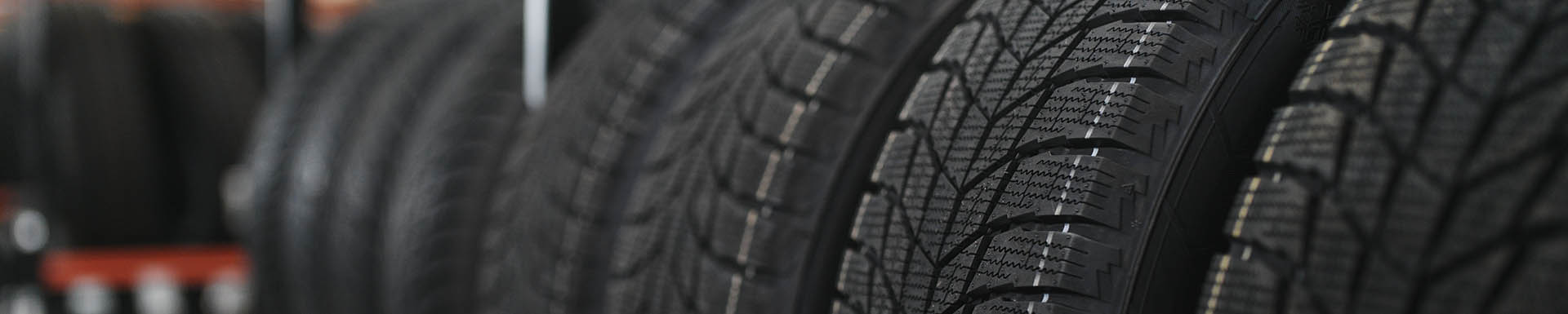
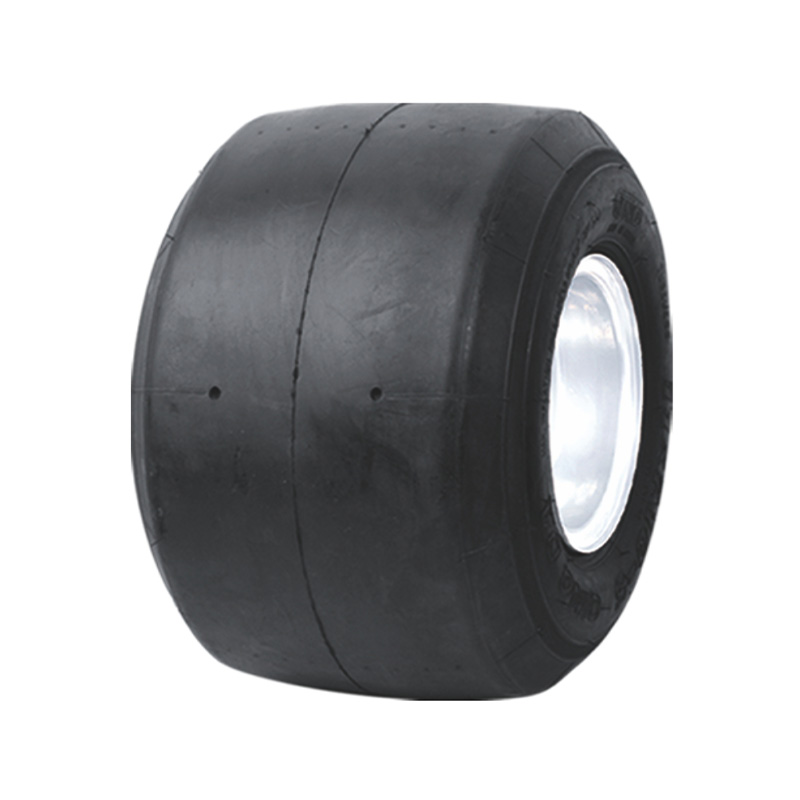
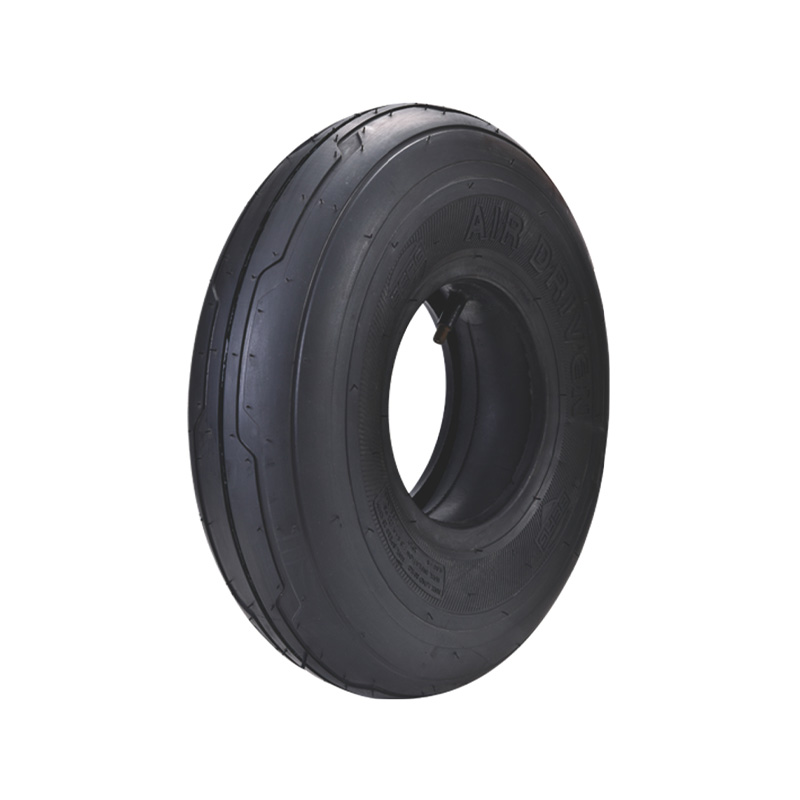
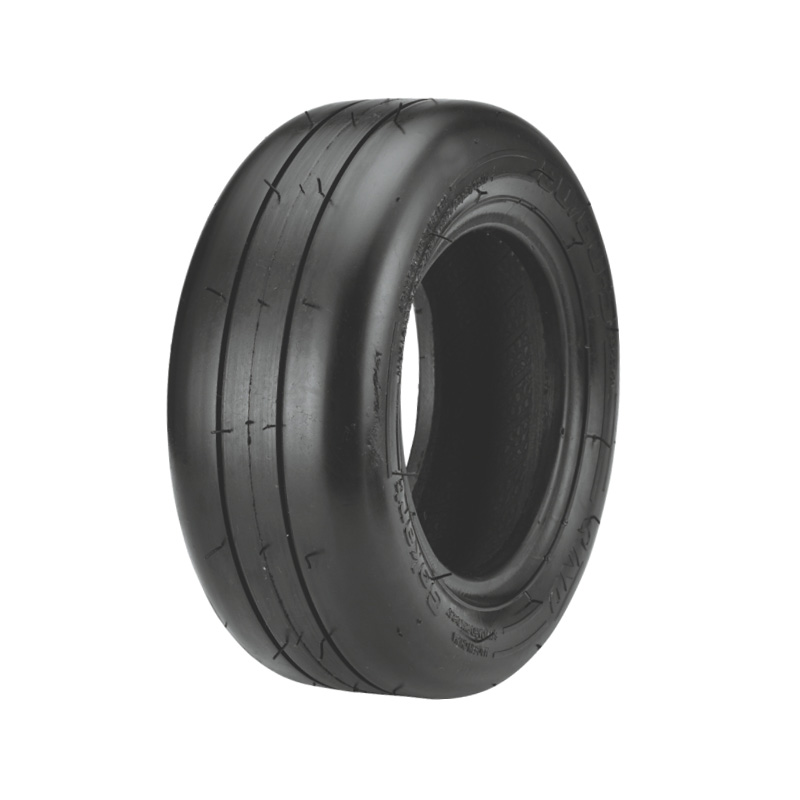
Kart Tyres are ultra-low pressure, high lateral load-bearing tires designed specifically for go-kart chassis without a solid axle suspension. Unlike road car tires, which prioritize long mileage and comfort, go-kart tires are designed for ultimate grip, instantaneous temperature response, predictable wear profiles, and structural stability under 2G+ lateral acceleration.
Since go-karts lack a suspension system, the tire itself and the chassis form a unique "spring-damping system"—the tire sidewall stiffness, carcass ply structure, and rubber compound directly determine the vehicle's handling characteristics, cornering limits, and driving feedback.
Application Scenarios: Who is Purchasing Karting Tires in Bulk?
1. Commercial Rental Karting Tracks
- Fleet Size: Standard indoor/outdoor karting tracks typically have 20-60 rental karts.
- Tire Consumption: Rental tires are high-frequency consumables; even hard tires need to be replaced every 2-4 weeks under intensive operation.
- Key Requirements: Ultra-hard, durable compound (68 Shore+) – such as Maxxis Victor 68 Shore, designed specifically for high-utilization rental fleets, aiming for the low hourly operating cost.
2. Professional Racing Teams and Clubs
- Equipment Size: Professional teams consume 4-8 sets of dry tires + at least 1 set of wet tires per season, with a single race cost of approximately $1,000 (4 sets of dry tires + 1 set of wet tires).
- Tire Selection: Precisely select hardness based on track temperature – softer (42-48 Shore) for low temperatures, harder (57-68 Shore) for high temperatures. (Shore)
- Technology Trends: CIK-FIA certified tires are mandatory for international racing events, with a three-year certification cycle (Homologation Cycle)
3. Karting Dealers and Parts Retailers
- Business Model: Covering all categories including tires, rims, tire pressure tools, tire heaters, etc.
- Demand Characteristics: Requires coverage of all sizes of 5-inch and 6-inch rims, and a full hardness matrix from soft to hard.
4. Karting Training Schools and Youth Programs
- Equipment Types: Cadet (children's karting), Junior (teenagers), KA4, and other entry-level vehicles.
- Tire Selection: Medium hardness (48-57 Shore), balancing the learning curve and cost control.
- Special Requirements: Some races require standardized tire supply (e.g., Karting Australia designates Maxxis as the supplier for Cadet KA level 2022-2026).
5. Indoor Electric Karting Tracks
- Environmental Characteristics: Stable temperature, no rain, smooth surface.
- Tire Selection: Hard slick tires (60-68 Shore) Shore, low rolling resistance for extended battery life
- Special requirements: Low-noise compound (required for some tracks), unmarked tires (for ground protection)
6. Dirt/Off-road Karting Tracks
- Environmental characteristics: Loose soil, gravel, mud
- Tire selection: Spiked tires or deep-grooved wet tire variants
Note: Dirt tires are not interchangeable with standard slick tires and require specialized rims and chassis setups
Reasons for Purchasing: Why Buy in Bulk from Us
Tire Pressure Management Technical Support
Kart tire pressure windows are extremely narrow, directly affecting tire temperature and grip:
- Standard cold tire pressure: 2-stroke front tire 10-11 psi, rear tire 11-13 psi; 4-stroke front tire 11-13 psi, rear tire 14-16 psi
- Wet tire pressure: 14-16 psi (2-stroke), 15-17 psi (4-stroke)
- Temperature management: Tire heaters are recommended. Warmers and tire pressure gauges are provided to preheat tires to their operating temperature window before the race.
Racing Compliance Guarantee: A complete supply of CIK-FIA-certified tires, covering all racing levels, including KF, KZ, OK, and Junior.
Certification cycle information is provided (currently a three-year certification system) to ensure compliance with racing regulations.
Following the dynamics of FIA-designated suppliers (such as Vega, LeCont, Bridgestone, MG, etc., designated for rotation).
Supply Chain Stability: Full-size inventory of 5-inch and 6-inch rims (4.5/10.0-5, 5.0/11.0-5, 6.0/11.0-5, 7.1/11.0-5, 5.0/11.0-6, 8.0/12.0-6, etc.). Safety stock of commonly used hardness (48, 55, 60, 68 Shore). Support for sorting by chassis brand (Tony Kart, CRG, BirelArt, Praga, Sodi, etc.) and engine type (Rotax, IAME, Vortex, TM). (Racing, etc.) Precise Tire Specification Matching
Common Karting Tire Procurement Questions
Q1: Can slick tires and wet tires be mixed? For example, wet tires on the front and slick tires on the rear?
A: Absolutely not. Mixing karting tires will to serious handling imbalance:
Excessive difference in grip between the front and rear axles → Oversteer or understeer, making it very easy to lose control
Differences in tire construction (wet tires are usually narrower and softer) → Inconsistent dynamic response
- Racing rules: All official races prohibit the mixing of dry and wet tires.
- The only exception: Some dirt tracks allow the use of a "full wet tire" configuration (all four wheels are wet tires), but this is a uniform strategy under specific track conditions, not a mixing.
Q2: My karting track is indoor electric. Are there any special requirements for tire selection?
A: The tire requirements for indoor electric go-kart tracks differ significantly from those for gasoline-powered go-karts:
- Low rolling resistance: Electric go-karts have limited battery life; a hard compound (60-68 Shore) reduces rolling resistance and extends lap time.
- Low noise: Some indoor tracks have strict noise restrictions, requiring a low-noise rubber compound. Unmarked tires: Protect indoor epoxy/flooring surfaces and prevent carbon black marks.
- Temperature stability: Indoor temperatures are typically stable (20-25°C), eliminating the need for multiple hardness options; a single medium-hard compound is sufficient for year-round use.
- Wear resistance priority: Electric go-karts have direct torque output, resulting in different tire wear patterns compared to gasoline-powered vehicles; a high-wear-resistance compound is necessary.
Q3: Do you offer tire heaters and tire pressure monitoring tools for purchase?
A: Yes. Go-kart tire performance is highly dependent on temperature management. We offer a complete tire management toolkit:
- Tire Heaters: Preheat tires to their operating temperature (typically 40-60°C) before the race to prevent loss of control due to cold tires on the lap.
- High-Precision Tire Pressure Gauge: 0.5 psi accuracy, supports both cold and hot tire measurements.
- Durometer: Measure tire hardness on-site to confirm batch consistency.
- Tire Temperature Gun: Infrared thermography to monitor the tire's operating temperature window.
- Tire Removal Tools: Professional tire changer, Beadlock Screws – Beadlock screws are essential for preventing tires from coming off the saddle under the high lateral forces of go-karting.


 English
 中文简体
中文简体
 Español